Build real-world solutions for Thailand with AI.
Win $850 of OpenAI credit and ChatGPT Pro. Everyone who takes part gets $100 of credit, free.
 Thai Society





Building with Codex workshop, run by OpenAI engineers. Plus a 15-minute video from each track partner. Highly encouraged.
Every participant gets $100 of OpenAI credit, free.
Prizes on top, provided by OpenAI and shown as their dollar value. Three overall places.
The top 5 teams also get an exclusive session with companies in Thailand to present their solution and explore building it further.
Prize amounts are OpenAI API credit shown as their dollar value, for building on after the event. Every participant also receives $100 of credit on registration. ChatGPT Pro is one subscription per overall placing. How prizes split across a team is confirmed with the partner before the day.
Overall places are judged across all tracks. The top 5 teams present to relevant companies in Thailand after the event, to explore further development and collaboration.
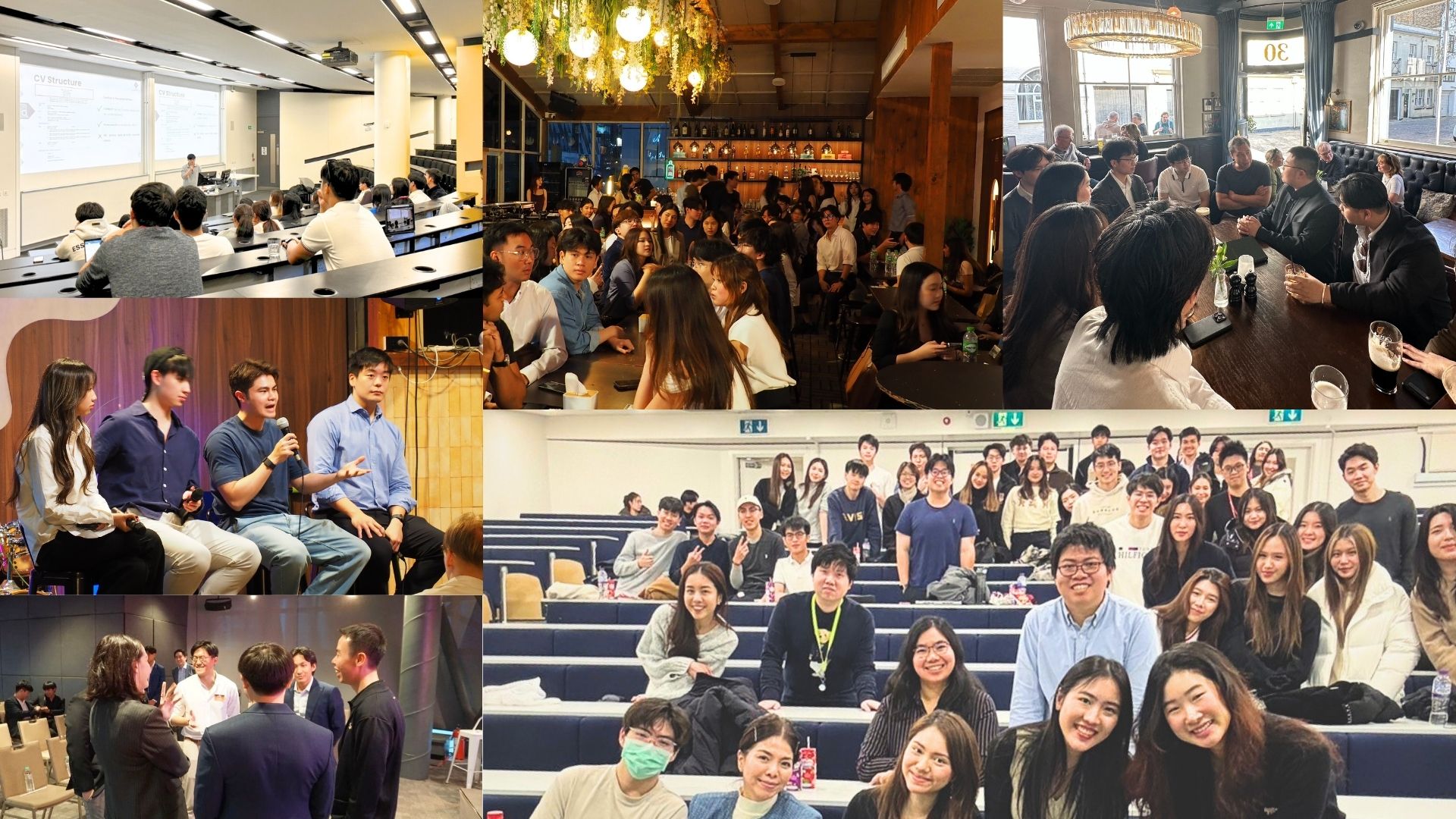
100 places at Imperial. When they are gone, they are gone.
A Thai teammate is highly recommended for local context.
Every team passes six checks before the main day. All pass or fail, none scored.
Solo matching uses what you tell us at registration: strongest area (technical, research, design, business, pitching), coding confidence, hackathon experience, and what you want from the hackathon. We spread skills and experience across teams and group people with similar goals.
Online, Friday 27 November, 19:00 to 20:00. You leave with Codex shipping code on your own repository.
Fifteen minutes per team. Booking opens at 13:00.
London community of 500 Thai students across 30 UK universities.
Building with Codex, Friday 27 November, 19:00 to 20:00, online, run by OpenAI engineers. Codex set up on a team repository, prompting for scoped changes, reviewing and testing generated code, data and API glue. You leave with Codex running on your own repository and one feature shipped through it.
Pitch and demo, Saturday 15:30 to 16:00. Deck structure mapped to the judging criteria, demoing a partly built product honestly, the thirty-second problem statement, handling questions. You leave with a deck skeleton and a written five-minute demo script.
Mentors take fifteen-minute drop-ins per team from 13:30 to 15:30 on Saturday, in person or online. Booking opens at 13:00 through the QR code in the Mentors section.
Three tracks, each a real problem in Thailand. Pick one, build a working solution on Saturday, pitch it that evening. Track partners AIS, Techsauce, ARISE and SeaBridge brief each track.
How can we leverage AI to solve urban challenges, improve essential services, and strengthen Thailand's connectivity with global markets?
Pick one of two sub-challenges:
How can we use AI to overcome barriers to financial access, improve financial decision-making, and create more inclusive economic opportunities for underserved communities and small businesses in Thailand?
How can we use AI to address everyday health and wellness challenges, promote preventive care, and make reliable health information and support more accessible to people in Thailand?
The hackathon asks three things of every team: identify a real problem in Thailand, build a practical solution using Codex, and show how it could create impact beyond the competition.
Pick one of two sub-challenges:
Out of scope: solutions that need large-scale hardware or city-level infrastructure, and generic business tools with no clear link to urban innovation or business opportunities in Thailand.
Difficulty: medium to high. May involve AI matching, market intelligence, geospatial analysis or data integration. Must work as a prototype demo.
Track partners: AIS and Techsauce.
In scope: access to credit, savings and insurance for informal workers, small businesses and unbanked households; financial literacy; debt and cash-flow management; tools for community lenders and cooperatives.
Out of scope: trading or investment apps for retail investors, crypto, and products for people banks already serve well.
Difficulty: medium. Light engineering, heavy domain research. You need to show you understand real borrower behaviour and interest mechanics.
Track partner: ARISE.
In scope: health, wellbeing and longevity through three areas. Molecule (food, nutrition and lifestyle), Movement (physical activity, sport and mobility), and Music and Sound (sleep, mood, mental wellbeing and relaxation).
Out of scope: anything that issues a diagnosis or treatment as a medical authority, or that depends on clinical data or regulatory approval to function.
Difficulty: entry level. Buildable with AI-assisted development and no coding background. Winning here comes down to impact and originality.
Track partner: SeaBridge.
Hackathon day: Saturday 28 November, Skempton 164, Imperial College London. Kick-off: Friday 27 November, online.
| 18:00 18:10 | Opening remarksHow the evening runs. The theme. |
| 18:10 19:00 | Track insight sessionA 15-minute video from each track partner: AIS, Techsauce, ARISE and SEA Bridge. |
| 19:00 20:00 | Building with Codex workshopRun by OpenAI engineers. Codex on your own repository, one feature shipped. |
| 20:00 20:15 | Closing remarks |
| 10:00 10:30 | RegistrationCheck-in. Remaining solo participants placed. |
| 10:30 11:00 | Opening ceremonyRules, tracks, judging criteria. Booklet released. |
| 11:00 11:30 | Track briefingsTen minutes per track from the track experts. |
| 11:30 12:30 | Hacking starts |
| 12:30 13:30 | LunchBrought to teams. Building continues. |
| 13:30 15:30 | Mentor drop-inFifteen minutes per team, in person or online. |
| 15:30 16:00 | Pitch and demo workshopCutting scope to something you can show. Deck skeleton and demo script. |
| 16:00 17:30 | Hacking continues |
| 17:30 18:00 | Code freezeDeck and repository submitted. |
| 18:00 18:30 | Tech checksJudges read the decks. |
| 18:30 19:00 | PitchesFive minutes, then three minutes of questions. Grouped by track. |
| 19:00 19:30 | Demo fair and awardsJudges deliberate while teams demo to each other. |
Deck and repository by 17:30 Saturday. Five criteria, each a fifth of the score, each marked 1 to 10. Eligibility is checked separately as pass or fail.
Does it address a problem that matters, with clear users or beneficiaries. Could it be adopted, could it scale, would it last. Any financial or economic effect.
Is the core idea original. Does the team see an existing problem from a new angle. Is technology used in a way we have not seen before.
How effectively Codex was used across the build. Coding, iteration, debugging, testing, and the technical-adjacent work around them.
Quality and structure of the build. Difficulty. Does it work, is it complete, is the code and architecture sound.
Clarity and structure of the pitch, quality of the demo and materials, how the team handles questions.
A pitch deck and a repository that between them cover all seven.
Stage one is the eligibility check, pass or fail, listed under Requirements. Stage two is the scored judging below. Each criterion is marked 1 to 10 and carries 20% of the total.
Score bands. 9 to 10 outstanding, exceptional with very limited weaknesses. 7 to 8 strong, clear quality with some room to improve. 5 to 6 good, meets expectations with notable gaps. 3 to 4 fair, partially meets expectations. 1 to 2 needs improvement.
Submission. Each team submits a pitch deck and a repository by 17:30 on Saturday covering: problem statement, target users, proposed solution, working prototype, use of Codex, potential impact, scalability.
Track experts brief each area on Saturday morning. Mentors take fifteen-minute drop-ins through the afternoon. Judges score from technical and industry perspectives. Names and photos in November.
AISSmart Cities and Global Connectivity partnerTechsauceSmart Cities and Global Connectivity partnerARISEFinancial Inclusion partnerSeaBridgeHealth and Wellness partnerScan on the day, or tap, and type your team name into a free slot. Two per team. Booking opens at 13:00 on Saturday. The mentor's meeting link is on the same sheet.
Three groups support the teams. Track experts give the ten-minute briefings on Saturday morning and share insight into each challenge area. Mentors, in person or online, take fifteen-minute drop-ins per team from 13:30 to 15:30. Judges evaluate from technical and industry perspectives and deliberate during the demo fair.
Names, roles and photos are published here in November. Mentor booking opens at 13:00 on Saturday, 30 minutes before drop-ins start, through the QR code above.
Hackathon day is in Skempton 164, Imperial College London, South Kensington Campus, London SW7 2AZ. Nearest tube South Kensington. Friday's kick-off is online.
Imperial College London, South Kensington Campus, Exhibition Road, London SW7 2AZ. The hackathon on Saturday 28 November is in Skempton 164, in the Skempton Building. The Friday 27 November kick-off and Codex workshop are online, with the link sent to registered participants. Directions are emailed before Saturday.
Nearest tube: South Kensington (District, Circle, Piccadilly), about eight minutes on foot via the subway under Exhibition Road. Gloucester Road is a similar walk. Buses 9, 14, 49, 52, 70, 74, 345, 360, 414, 430 and C1 stop on or near Exhibition Road.
Apply as a team or on your own.
Submissions open here on Saturday 28 November and close at 17:30.
